
Helping greenhouse growers make informed energy choices
Reducing energy consumption is only one part of the challenge of decarbonising heated greenhouses. Growers also need to identify which solutions could replace fossil fuels at farm level. These decisions are complex, as they depend on factors such as greenhouse characteristics, location, heat demand, locally available energy resources and the level of investment required.
RE-Greenhouse is addressing this challenge across North-West Europe, the region with the highest concentration of heated greenhouses on the continent. Launched in late 2023 for a four-year period, the project aims to bring together knowledge that has until now been scattered across countries and organisations, and make it directly accessible to growers and their advisers. In France, this work builds on a greenhouse sector that has already reduced its greenhouse gas emissions by 57% since 2006.
At the heart of the project is an online decision-support tool. Growers can enter information on their greenhouse facilities, energy consumption, current energy costs and location. The tool then provides quantified scenarios for switching to renewable or recovered energy sources. The aim is to make technical and economic options easier to compare when preparing an investment decision, while complementing rather than replacing specialist advice.
Six pilot sites bringing real-world data into the tool
The development of the decision-support tool draws in particular on six pilot sites in Belgium, France, Luxembourg and the Netherlands. Together, they cover a range of energy configurations, including biogas, wood and pellet biomass, solar energy, heat networks and recovered heat from industrial processes. Data from these installations are supplemented by scientific and technical literature, previous projects and feedback from local user groups.
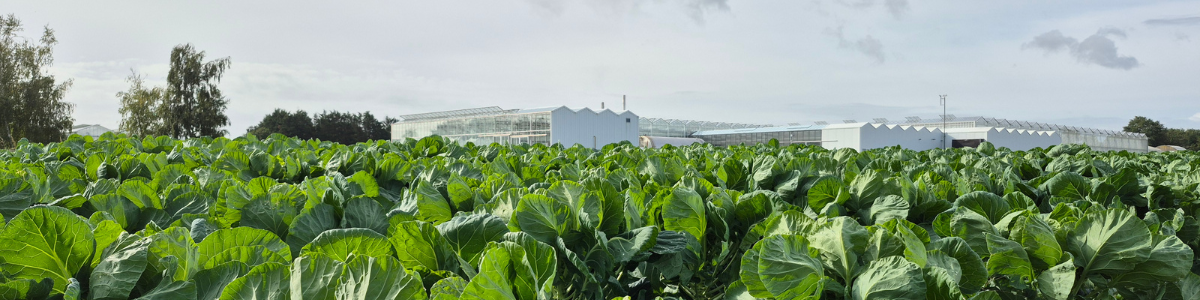
In France, CTIFL is monitoring a pilot site in Briec, Finistère: 7 hectares of glasshouses producing tomatoes for the Savéol group. Since 2010, the site has made use of heat recovered from the nearby SIDEPAQ waste incineration plant. Hot water is transferred to the greenhouses via a heat exchanger and the heating network, providing RE-Greenhouse with data from a commercial production site already operating with a recovered heat source.
Alongside this experimental contribution, CTIFL is involved in developing the tool and in communication and training activities. In France, it works in particular with ASTREDHOR, which is monitoring an ornamental horticulture pilot site heated with wood biomass, and Végépolys Valley, which is involved in deploying the tool and liaising with French users.
A beta version now being tested by users
A first free beta version of the tool was officially launched in June 2026 at GreenTech Amsterdam. It enables professionals to carry out an initial assessment of the energy solutions that may be suitable for their situation. This marks the start of a testing and user-feedback phase designed to refine the platform ahead of the final version.
In the longer term, the tool is also expected to include a library of information for each energy source, together with data on costs, investment requirements and financial support available in the different participating countries. Dedicated training for energy advisers working with producer organisations and chambers of agriculture is also planned to support uptake. In France, the stated objective is ultimately to reach around 600 growers operating heated greenhouses, with energy advisers acting as key intermediaries.
A collaborative project involving five countries
Coordinated by Inagro, RE-Greenhouse brings together 11 partners from Belgium, France, Germany, Luxembourg and the Netherlands : Inagro, Boerenbond, FarmTech Society, CTIFL, ASTREDHOR, Végépolys Valley, IFSB – Institut de Formation Sectoriel du Bâtiment, Greenport West-Holland, The Hague University of Applied Sciences, Municipality of Westland and Trier University of Applied Sciences – IfaS – Institute for Applied Material Flow Management. Together, the partners contribute expertise in areas including energy, greenhouse production, modelling, decision-support tool development, training and knowledge transfer to professionals.
The project has a total budget of €3.80 million and receives €2.30 million in European funding through the Interreg North-West Europe, co-funded by the European Union.
Perspectives
The trials carried out in 2026 are intended to assess the tool against the practical needs of greenhouse growers and their advisers, and to guide further improvements. By bringing together references from several countries and a range of energy configurations within a single platform, RE-Greenhouse aims to provide a more structured starting point for greenhouse decarbonisation projects and to support technical and economic decisions that can commit businesses for many years.